A story of heartbreak, reflection, and resilience
GEORGE - A Furry Tale
GEORGE A Furry Tale is a new original British musical about a man who grows up using a childhood teddy bear to survive loneliness, trauma, and mental health struggles — and how community, love, and self-acceptance help him finally stand on his own.
Warm, funny, and deeply human, the story explores chosen family, masculinity, addiction, and finding light when the world feels too loud.
Told through intimate storytelling, contemporary music, and a community of flawed but compassionate people, GEORGE is a hopeful musical about survival, connection, and learning that you do not need to be “fixed” to deserve love.
© JMS (Jamie Stewart) 2026. George the Musical is an original work.
All rights reserved.
All about George
George is an original British musical about survival, identity, and the quiet strength it takes to keep going.
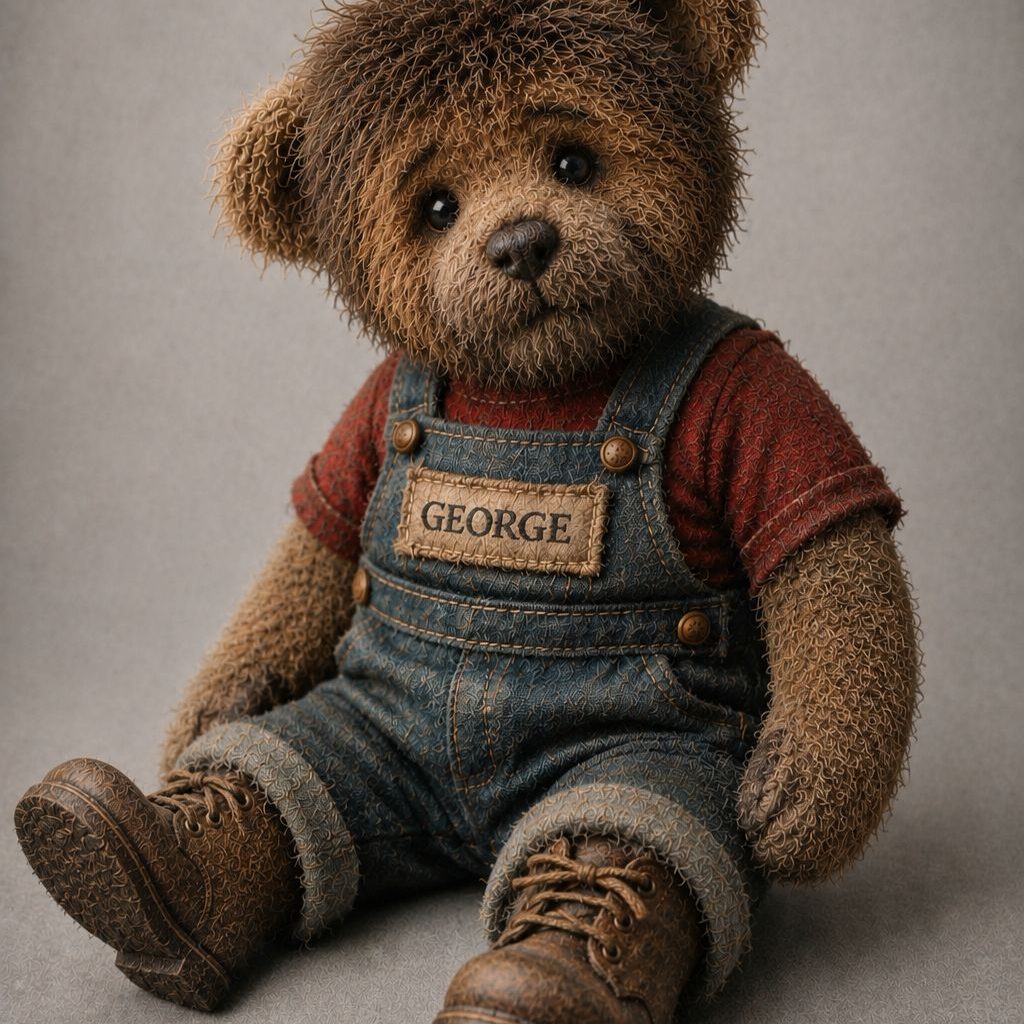
Mikey grows up feeling different — sensitive in a world that demands toughness, softer in places that reward silence. When his home life begins to fracture, he finds comfort in an imaginary teddy bear named George. What starts as a childhood coping mechanism becomes something far deeper: a lifeline through loneliness, fear, and the growing weight of adulthood.
As Mikey grows older, the world asks more of him. Love becomes complicated. Community feels fragile. Mental health struggles intensify. Relationships test his sense of worth, and the comfort that once kept him safe begins to slip away. The musical follows Mikey through moments of humour, heartbreak, addiction, loss, and recovery — charting the cost of being unseen, and the danger of believing you have to face everything alone.
Running parallel to Mikey’s inner journey is a wider fight for belonging: the battle to save a threatened community space that holds together people who, like Mikey, have nowhere else to go. As voices rise and connections form, Mikey is forced to confront who he has been, what he has lost, and who he might still become.
Told through contemporary pop-theatre songs, raw emotional storytelling, and moments of warmth and joy, George is ultimately a story about chosen family, masculinity redefined, and learning that the strength you’ve been searching for was never imaginary at all.
Childhood
Mikey grows up feeling different — quieter, softer, and more sensitive than the world around him seems to allow. When things at home begin to fracture, he finds safety in an unlikely place: a small teddy bear named George. George becomes his constant — a silent listener, a shield against loneliness, and a symbol of the comfort Mikey struggles to find elsewhere. Through childhood moments of joy, fear, and confusion, George represents the part of Mikey that wants to believe the world can still be kind.
Community
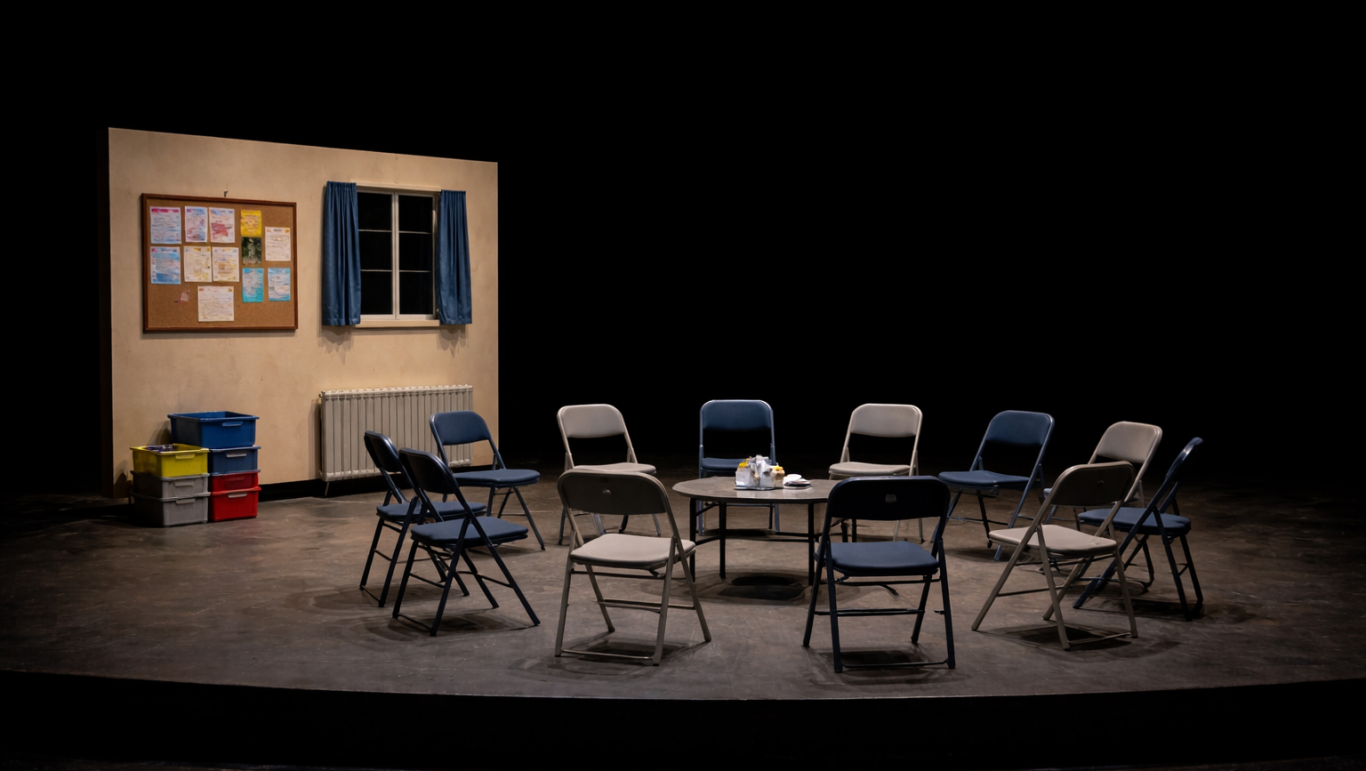
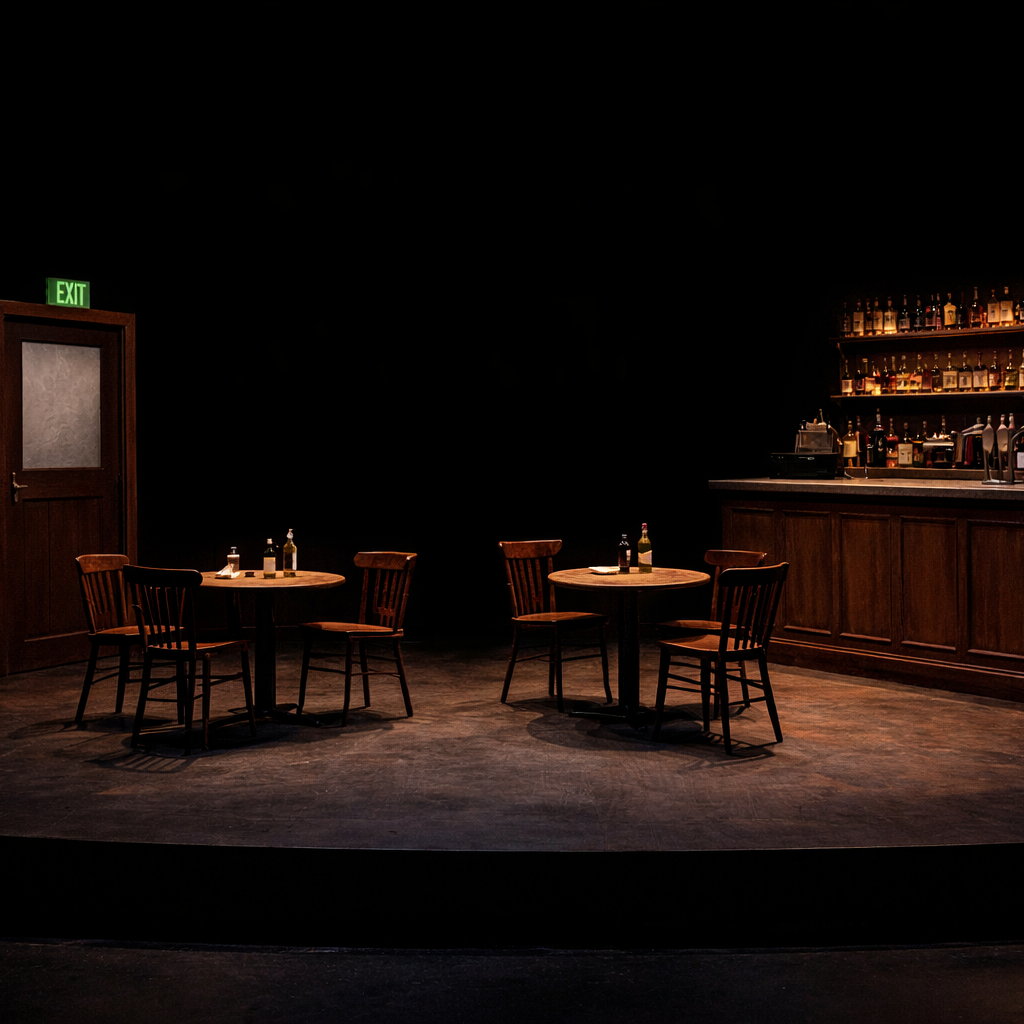
Community — the places and people who hold us up when we can’t stand on our own. From pubs and Clubs, from support groups to community halls under threat, the musical shows how fragile spaces can become lifelines. It explores how new families are built, how voices grow stronger together, and how ordinary people can create extraordinary change when they refuse to be invisible.
Growing
As Mikey grows older, life tests him in deeper, in more complicated ways. Love, loss, identity, and self-worth collide as he navigates a world that often asks him to be less than he is. Across the journey, Mikey learns that strength doesn’t always look loud or fearless — sometimes it’s found in honesty, connection, and the courage to keep going. It follows a man learning, piece by piece, how to shine in his own light. Sometimes you just have to take a good hard look in the mirror, to see who is looking back at you.
How George was Born
From the Creator
I have always loved musical theatre — the buzz, the anticipation, the moment when a show finally comes to life after you’ve lived with its soundtrack for so long.
Growing up, I struggled with mental health, identity, and rejection — experiences shared by many people, but often lived quietly. George began as a way to explore those feelings honestly, and to create a story that could hold both darkness and hope.
The idea started with a spark — a single image — and from that moment, the writing began. George was born.
The script went through many drafts, rewrites, and late nights. Scenes were reshaped, flawed characters and arcs evolved, and songs were written, cut, merged, then rewritten as the story found its true form. Of the many songs originally written, only those that genuinely served the narrative remain in the final draft. (There have been a lot)
As the musical grew, so did the need to refine it. Length was trimmed, scenes combined, and emotional beats sharpened — not to lose depth, but to make the story clearer, stronger, and more honest. Every change was made to give a true story for each of the characters and that journey they take.
It has many complex elements, hidden motifs, sights and sounds that work on a subconscious level that will make audiences see extra things, each time they experience the show. It's not just about what the characters say or sing; it's what the audience sees and feels. Even the music has an identity. It's a strong story written as a tapestry. The dialogue and songs are the main pattern, but the colour, texture, and hidden knots of the motifs are what will make it so rich and emotionally resonant. The audience will feel the story as much as they see it.
While I do not write traditional musical notation, music has always been central to my life. I DJ, I live in music, and I know instinctively what emotional tone a moment needs to carry. To explore this, I used music tools during the early demo stage — as a sketching and exploration tool — allowing me to experiment with genre, tempo, mood, and structure. Many songs went through dozens of iterations before the right emotional shape emerged.
These demos are not finished scores. They are placeholders — working drafts intended to communicate tone and intent. As the show moves into workshop and production stages, the music will be fully scored, orchestrated, and refined in collaboration with musicians, composers, and producers.
What is complete — and entirely original — is the story, script, lyrics, and dramatic structure of George. The heart of the show has always been human, personal, and carefully crafted.
Below are a few glimpses into that process — handwritten script pages and early music drafts — it's not going to be the final polished performance. It's a window on how the musical has been built: slowly, deliberately, and with loving care.
Creating a musical is not something done overnight. It takes time, patience, and belief. My hope is that one day, George gives someone else that same buzz — the feeling of walking into a theatre and recognising a piece of themselves on stage.


Born on paper
Handwritten Script Pages
First Page of the Table Read and Two pages from the first written version.
Producer Summary
Including Requirements & Status
George — A Furry Tale is a powerful new British musical about growing up, falling apart, and finding your way back to yourself.
Following Mikey from childhood to adulthood, the story explores the lasting impact of fear, family fracture, addiction, identity, and loneliness through the symbol of a teddy bear named George — the comfort and courage Mikey once believed only existed outside himself.
Set against the backdrop of a struggling community centre filled with imperfect but deeply human characters, the musical celebrates friendship, recovery, chosen family, and the people who help us survive when we feel hardest to love.
Emotional, intimate, and ultimately life-affirming, GEORGE: A FURRY TALE is a story about carrying on — not because everything is fixed, but because none of us are meant to do life alone.
ACT I follows Mikey from childhood into adulthood as he begins searching for safety, identity, and belonging in a world that increasingly feels frightening and uncertain.
At the centre of his world is George — a childhood teddy bear who becomes a symbol of comfort, courage, and emotional survival. Through family struggles, loneliness, bullying, first love, nightlife, addiction, and heartbreak, Mikey slowly begins losing sight of himself while desperately trying to hold onto the feeling of safety George once gave him.
As the act progresses, the line between memory, fear, and reality becomes increasingly blurred. Childhood anxieties evolve into adult shame and self-destruction, culminating in a psychological and emotional collapse that forces Mikey to confront the question at the heart of the musical:
What happens when the thing you’ve relied on to survive is no longer enough to save you?
Act I ends with Mikey at his lowest point — isolated, exhausted, and standing at the edge of losing himself completely.
ACT II explores what happens after survival — when healing begins not through perfection, but through connection.
Following a breakdown fuelled by addiction, isolation, and self-hatred, Mikey is reluctantly pulled toward support, community, and the possibility of change. Through the people around him — his father Martin, childhood friend Sarah, and a warm but insecure man named Jon — Mikey slowly begins rebuilding a life he once believed was beyond saving.
Set largely within a struggling community centre threatened with closure, Act II expands beyond Mikey’s personal journey to explore the importance of human connection, chosen family, and collective care. As the community fights to protect the place that has kept so many people afloat, Mikey is forced to confront his past, repair fractured relationships, and finally question whether the courage he spent his life searching for in George may have been inside him all along.
Balancing emotional honesty with warmth, humour, and celebration, Act II ultimately becomes a story about flawed people learning how to stay — for themselves, and for each other.
Why This Musical Matters. It tells a story rarely explored in musical theatre with honesty, compassion, and hope.
At its core, the musical explores mental health, addiction, masculinity, loneliness, identity, and the long-lasting impact of emotional fear — not through spectacle or simplification, but through deeply human relationships. It asks what happens when someone spends their entire life believing safety and self-worth must come from somewhere else, and whether healing is possible when they finally begin to let people in.
The musical also shines a light on the quiet importance of community spaces and chosen family. Set against the backdrop of a struggling community centre, the story celebrates ordinary people carrying one another through difficult moments — flawed people trying, failing, reconnecting, and continuing anyway.
Rather than presenting recovery as a neat transformation or “happy ending,” GEORGE: A FURRY TALE argues that survival itself can be an act of courage. Its characters are not fixed by the end of the story, but they are no longer alone.
Through music, humour, vulnerability, and emotional truth, the musical aims to remind audiences that even in darkness, there can still be warmth, connection, and a reason to keep going.
The Heart of the Show is the idea that people do not need to be perfect, fearless, or “fixed” in order to deserve love, community, and a place in the world.
At the centre of the story is Mikey — someone who spends much of his life searching for safety and courage outside of himself, first through a childhood teddy bear named George, and later through other people, relationships, distractions, and survival mechanisms. But as the musical unfolds, he slowly learns that healing is not about becoming someone new. It is about learning to stay, to let others in, and to believe his life still has value even in its imperfect state.
The musical’s emotional core lies in connection:
family members who fail each other but keep trying,
friends who stay,
communities that hold people together,
and ordinary flawed people choosing compassion over isolation.
Ultimately, GEORGE: A FURRY TALE is a story about survival, vulnerability, and hope — about discovering that even when life feels frightening or overwhelming, there can still be light found in other people, in community, and within yourself.
PRODUCTION REQUIREMENTS
Cast Size
- 10–14 performers
- Flexible ensemble doubling
Band
- 5–7 musicians
- Contemporary pop/folk/choir instrumentation
Staging
- Revolving mirror unit
- Community centre modular set
- Club lighting rig
- Storybook framing device
Technical Highlights
- Mirror illusions
- Split‑stage scenes
- Transformation sequences
- Confetti finale
DEVELOPMENT STATUS
- Full script completed
- Full Act I & II structure locked
- Songs drafted
- Strong thematic identity
- Clear commercial positioning
- Ready for:
- Table read
- Workshop
- Demo recording
- Regional try‑out
WHY INVEST
- A fresh, original British musical
- A queer story with a joyful ending
- A mental‑health narrative handled responsibly
- A community‑driven story with broad appeal
- A finale that sends audiences out buzzing
- Strong potential for:
- West End
- Regional theatres
- Fringe festivals
- International licensing
- School & youth productions
This is a musical with heart, relevance, and longevity
Feedback
If you have any questions or interests, please contact below.